Work experience

During my interview at Knowsley Safari Park on 22nd March 2019 I had a group interview conducted by two members of the Learning and Discovery team. The interview began with an introduction from both members of staff. They explained more about the two placement types that they offer. The Discovery Team involves being part of engagement activities with visitors (Knowsley Safari, 2019). This can include: animal talks, accompanying visitors on the baboon bus and assisting with the giraffe encounters
(Knowsley Safari, 2019). Within the placement, students can assist with touch table station education and provide visitors with information about conservation projects supported by Knowsley Safari Park (Knowsley Safari, 2019) . The Explorer Team is one which runs a kids club (7-10 year olds) from Monday-Fridays (Knowsley Safari, 2019) . The team assist with animal encounters, crafts and games (Knowsley Safari, 2019) . Placement students have the opportunities to get involved in the delivery of activities and contribute to a long term research project that is ongoing by collecting data
(Knowsley Safari, 2019).

The group interview involved a small presentation of our ‘life timeline’ and a couple of group activities. Afterwards I had a 10 minute interview. In the interview we discussed that I was education, my work history and which placement I was interested in.

During the afternoon that day I received a call to say I’d been successful at the interview. I had been offered the placement which runs through the month of August this year. I will be doing 3 weeks with the Discovery Team and 1 week with the Explorer team. My training for the role will begin at the end of July. Plate 1 shows the placement offer email I received.
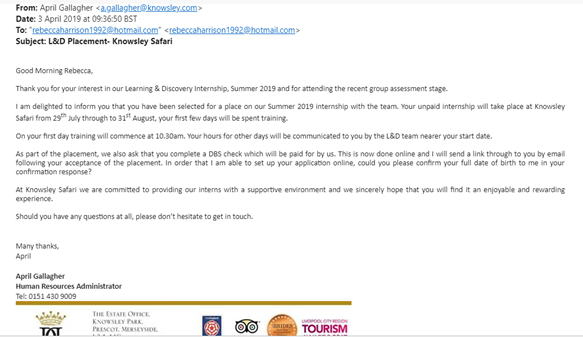
Plate 1. Learning and Discovery placement offer received via email (Authors own, 2019)

References:

Knowsley Safari (2019) Learning & Discovery Placements
http://www.knowsleysafariexperience.co.uk/education/internships Accessed 25/3/2019
Learning and discovery interview at Knowsley Safari Park preparations

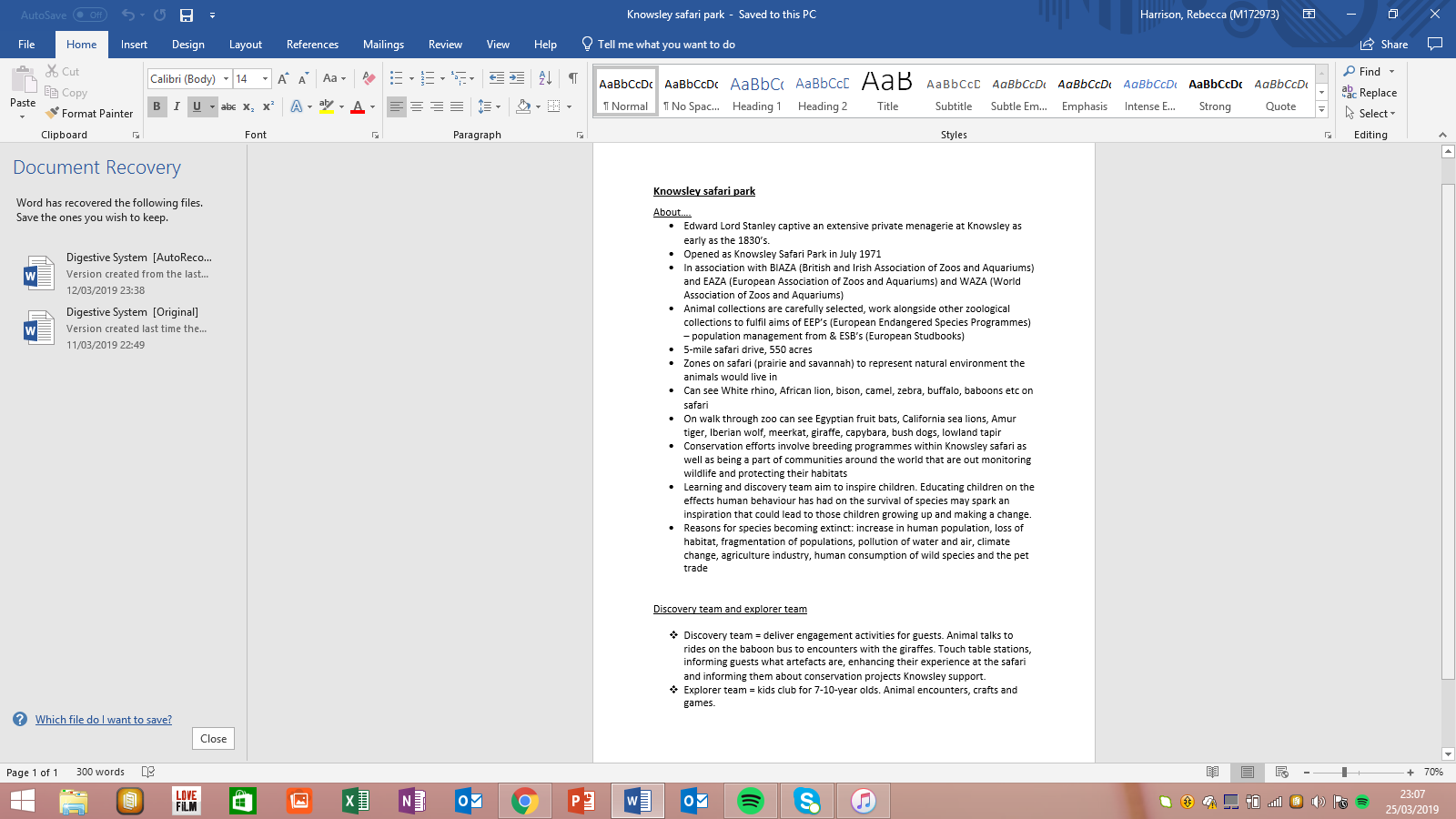
During January I applied for a learning and discovery placement that takes place at Knowsley Safari park for one month throughout August. I was recently contacted from the safari with an email inviting me to a group interview on 22nd March 2019. I confirmed that I would be attending the interview and then began to make preparations for it. I began finding research around Knowsley safari park. Including information such as: the date it opened, the animals they have on their safari drive through and those that can be seen on the foot zoo. The research I found can be seen in the image below (Plate 1).

In the email I was given details for the dress code of the interview, where it would take place and at what time. They also requested that I brought proof of identification such as my passport or drivers license. The day before the interview I ensured I had all of this prepared and ready. The night before I decided that I would set of driving half an hour earlier to ensure I was early to the interview and would have enough time to find the location I was asked to be at.

Plate 1. Print screen of research found in preparation for Knowsley safari park interview (Authors own, 2019)

Job searches

During the semester I have been actively looking for jobs. I am currently looking for part time roles that will fit around my university schedule. When I have broken up for the summer I will be able to apply for jobs that require me to work longer hours. For the most part I have been using the website Indeed to carry out my jobs searches. This website allows me to search for job roles that are available near me. The website has filters which allow you to specify the role you are looking for, the hours that you require and how many miles you would be willing to travel for the role. Most applications I have filled out have been retail roles because I have lots of experience in this department from working at WHSmith, Heron Foods and Co-op Food. In applications I have detailed that my desired hours to work each week would be 16 hours. I am currently looking for roles that are local to me, however if I am unsuccessful in the next few months I will broaden my search.

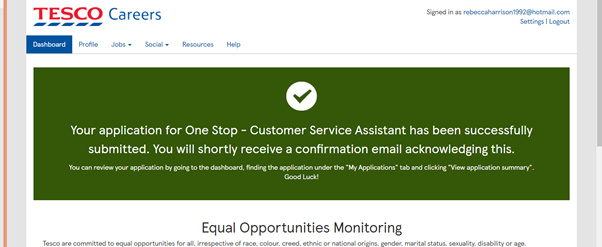
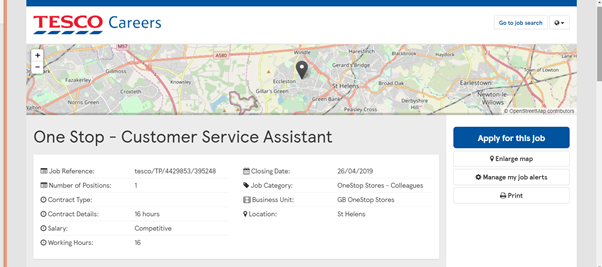
In plates 1 and 2 a recent job application I completed can be seen. I applied for a job at One Stop, a convenience store that is local to me. The job advertised offered a 16 hour contract which would suit my current schedule well. I have received a confirmation of my application via email from the company and will now await an email to say whether my application has been successful or not.

Plate 1. Image detailing the job vacancy at One stop (Authors own, 2019)
Plate 2. Submission of job application to One Stop (Authors own, 2019)

Visit to Bristol Zoo!

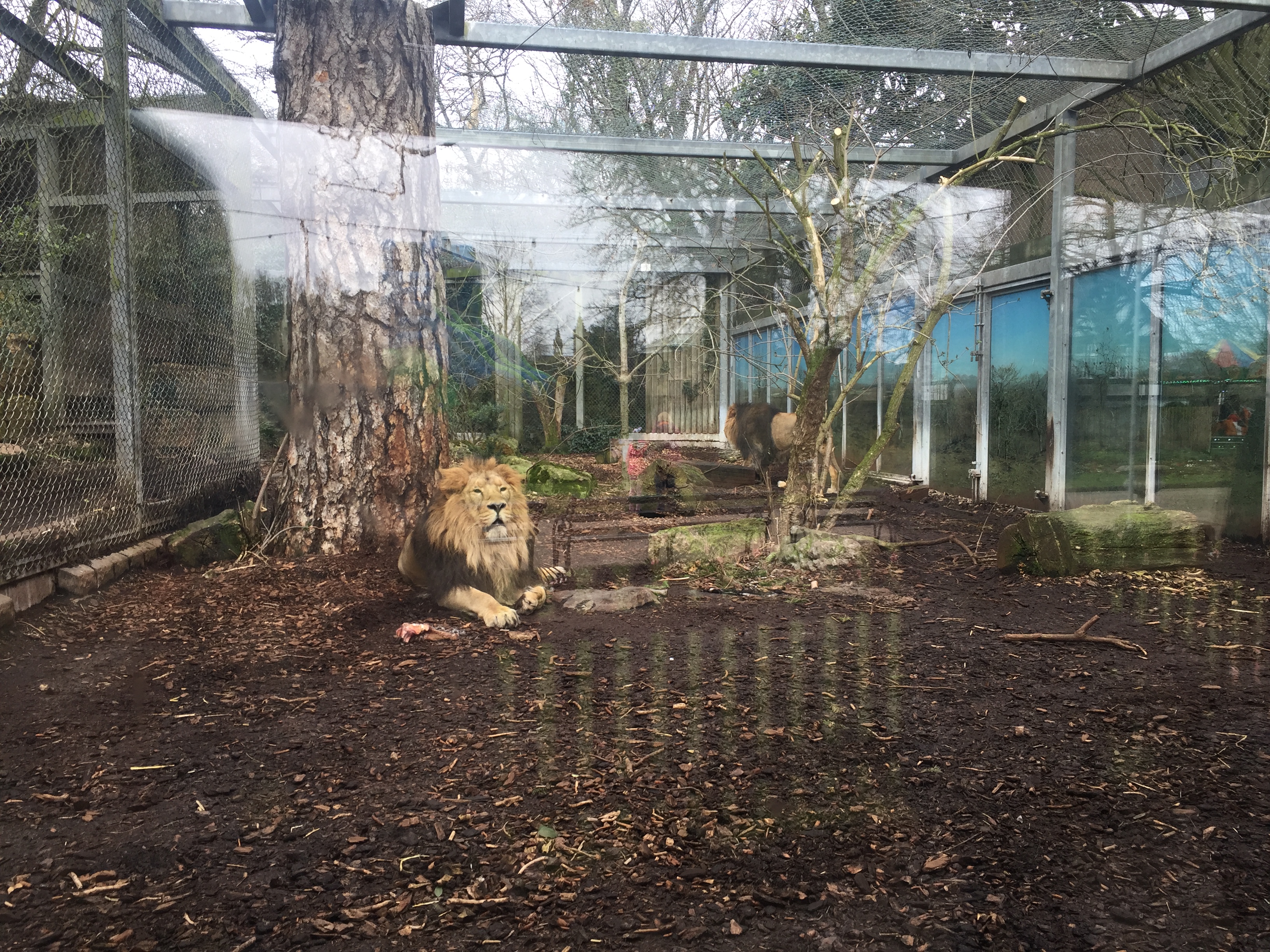
During the study week I had the luxury of being able to visit Bristol Zoo. I hadn’t been to both Bristol or Bristol Zoo before, so I was very excited about it! The zoo opened in 1836 and is the fifth oldest in the world (Bristol Zoo, 2019). They are a conservation and educational charity who have helped to save 175 species from extinction through conservation science research, protecting species and their habitats overseas, and educating the public about sustainable behaviours and perceptions that can protect the lives of the species that are endangered (Bristol Zoo, 2019). Below are images of some of the animals I saw at the zoo.

In Plate 4 is a California sea lion. Their scientific name is Zalophus californianus (Marine Animals of the World, 2018). They are found along Pacific coastlines from Mexico and the United States to Canada. California sea lions feed mostly on squid, octopus, herring, rockfish, anchovies and krill. They’re predated upon by whales and sharks. They’re intelligent social animals who form large aggregations on land with one another (Sea World, 2019). They possess large muscular fore flippers which they use to propel themselves through the water and hind flippers which act as a ‘rudder’, allowing them to change direction in the water (Marine Animals of the World, 2018).

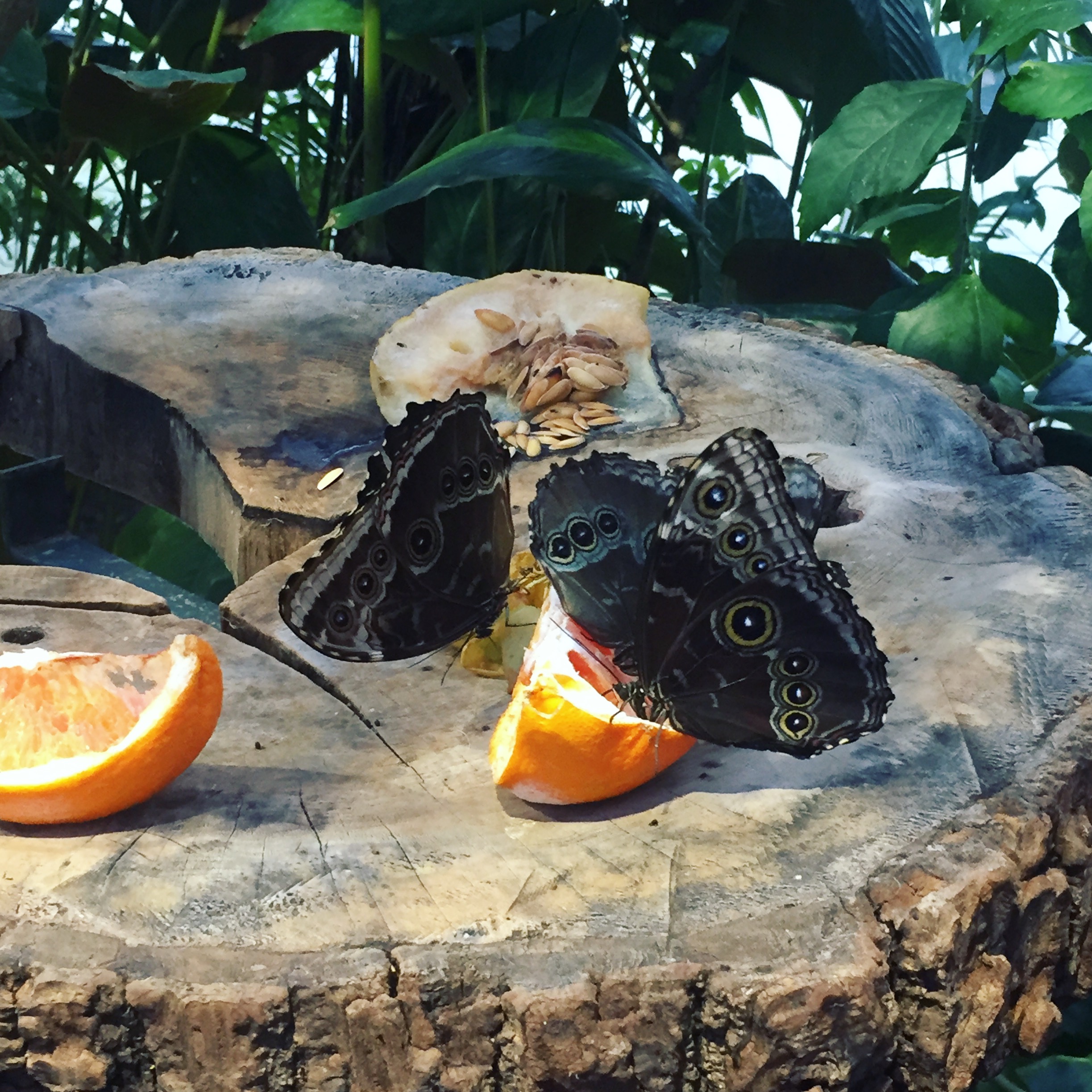
In Plate 5. are the owl butterflies I saw at the Bristol zoo butterfly forest. In the forest live both one species of moth and seven species of butterflies (Bristol Zoo, 2019). The enclosure is themed and designed to mimic the tropical rainforests that these species would naturally be found in (Bristol Zoo, 2019). Bristol Zoo (2019) stated there are 18,000 known butterfly species in the world, however the numbers of these species are falling due to human activity

Plate 1. Flamingo’s in their enclosure at Bristol Zoo (Authors own, 2019)
Plate 2. Lions in their enclosure at Bristol Zoo (Authors own, 2019)
Plate 3. African Penguins in their enclosure at Bristol Zoo (Authors own, 2019)
Plate 4. California sea lion in its enclosure at Bristol Zoo (Authors own, 2019)
Plate 5. Owl butterflies in butterfly forest enclosure at Bristol Zoo (Authors own, 2019)

References:

Alonso, C, J. (2018) Marine Animals of the World, Quarto Publishing Group, USA

Bristol Zoo (2019) Welcome to Bristol Zoo, https://www.bristolzoo.org.uk/explore-the-zoo/butterfly-forest Accessed 24/2/2019

Sea World Parks & Entertainment (2019) Behavior, https://seaworld.org/animals/all-about/california-sea-lion/behavior/, Accessed 24/2/2019H

Digestion seminar – Dissection!

This week in anatomy and physiology we learnt about the digestive system. Types of digestive systems include monogastric, hind-gut fermenters and ruminants.

The monogastric digestive system is a simple one stomached system. It is found in animals capable of eating meat and not a lot of planet matter for example: dogs, cats an pigs.

Monogastric systems are also found in animals that do eat a lot of plant matter however these are referred to as ‘hind-gut fermenters. For example: horses. Their one stomached chamber doesn’t possess enzymes strong enough to breakdown the plant matter they consume which is why their caecum appears much larger than that of a basic monogastric. The caecum contains bacteria, fungi and protozoa which can break down the bonds of plant matter.

Ruminants ferment plant matter in the fore-gut which is why they’re often referred to as ‘fore-gut fermenters’. Examples of ruminants include: goats, sheep and cows. They have four stomach chambers: the rumen, reticulum, omasum and the abomasum (also referred to as the ‘true stomach’). Fermentation within a ruminant system happens within the first stomach chamber: the rumen. The rumen partly digests food with aid of bacteria. Large food particles accumulate in the reticulum to form a bolus for regurgitation and cudding. In the omasum, food is grinded and nutrients are absorbed into the bloodstream. In the abomasum other nutrients are absorbed and micro-organisms are killed.

Continuing on from the morning lecture, our seminar involved the dissection of a sheep and pigs digestive systems in the labs. We were able to visibly see the difference between a monogastric (pig) and ruminant (sheep) digestive system. Our tutor Laura dissected through the ruminants four stomach chambers to show us how each one differs visually from one another. We were able to see that the rumen had lots of tightly packed papillae which act like ‘villi’ by increasing surface area for the absorption of nutrients. The reticulum had a honey comb appearing structure to it which traps large food particles for ‘cudding’. Like the rumen, the omasum had papillae but much less of them.

The dissection was very interesting and has really helped me to better visualise how the digestive system works.

Captive management – invertebrate guest speaker

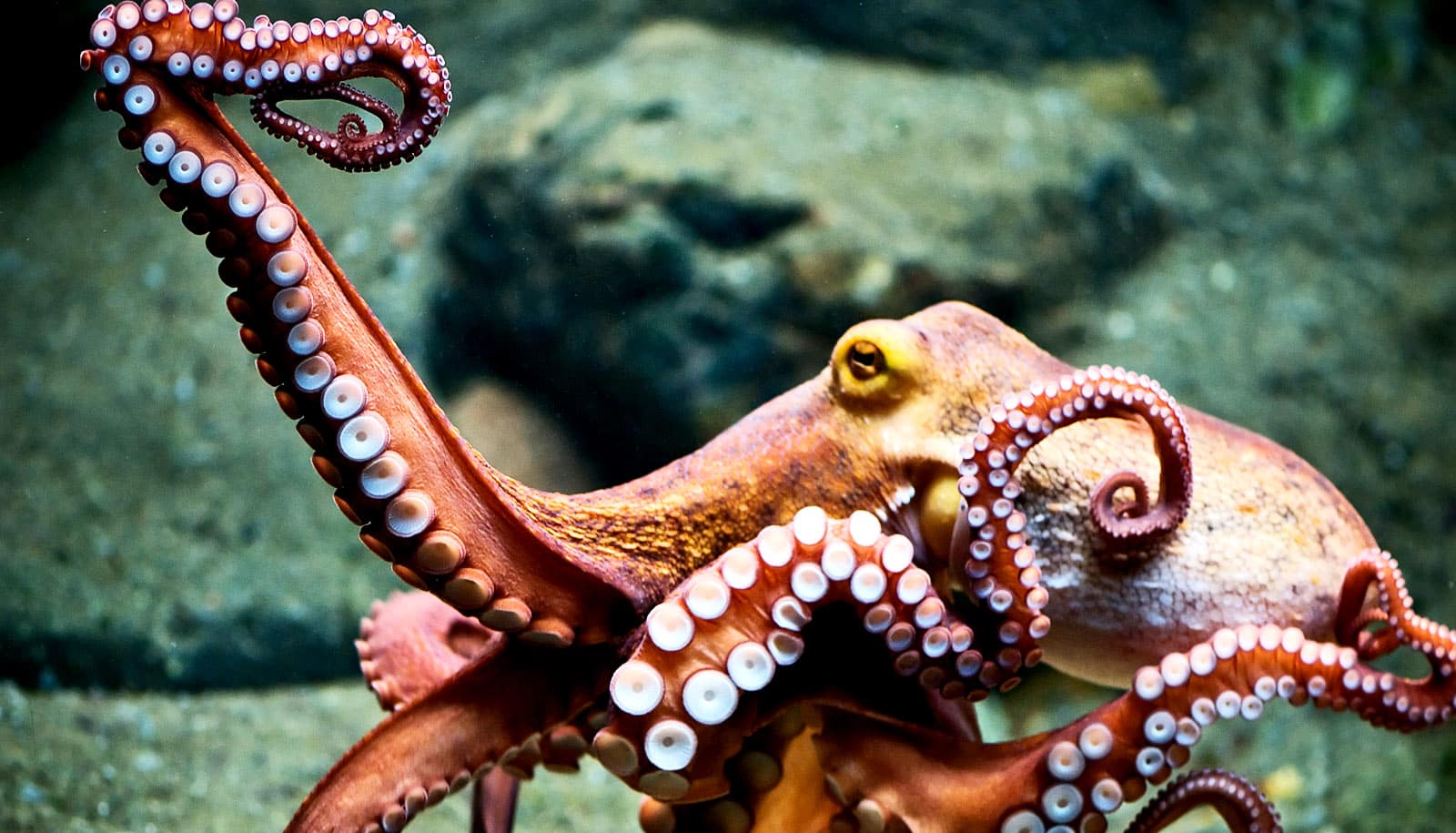
Invertebrates make up 97% of the animal kingdom (National Geographic, 2019). In our management of captive animals lecture this week we were joined by a guest speaker who works at and manages the invertebrate collection at Lakeland Wildlife Oasis. He explained that invertebrates are animals that have no backbone or bony skeleton. Examples of invertebrates include: butterflies, spiders, ladybugs and octopuses. They make up an overwhelming majority of the animal population which has been put down to their ability to reproduce at high rates as well being able to survive in extreme conditions (National Geographic, 2019).

Image result for octopus
Plate 1. Image of an octopus (Futurity, 2017)
Image result for butterflies
Plate 2. Image of a male Holly Blue (Butterfly Conservation, 2019)
Partula Snail
Plate 3. Image of critically endangered partula snail (Marwell Zoo, 2017)

During the lecture we were given a task to find out information about an endangered invertebrate species. I learnt about the partula snail (plate 3.) who have 77 species. 51 of which became extinct in the 1970’s due to the Florida rosy wolf’s snail who was introduced into the Pacific region to control the increase in population of the giant African land snail (Marwell Zoo, 2017) . The giant African land snail became a crop pest for farmers. However as well as feeding on the giant African land snail, the Florida rosy wolf snail also fed on the partula snails (Marwell Zoo, 2017). To conserve the partula snail, captive breeding programmes have been set up Europe and north America. The few remaining in the wild are being monitored and have had reserves made to protect them (Marwell Zoo, 2017).

References:

Butterfly Conservation (2019) A-Z of butterflies,
https://butterfly-conservation.org/butterflies/a-to-z Accessed 10/2/2019

Futurity (2017) Octopus-inspired material morphs from flat to 3D, https://www.futurity.org/octopus-3d-morph-robotics-1572882/ Accessed 10/2/2019

Marwell Zoo (2017) Partula snail,https://www.marwell.org.uk/zoo/explore/animals/37/partula-snail Accessed 10/2/2019

National Geographic (2012) Invertebrates pictures and facts,https://www.nationalgeographic.com/animals/invertebrates/ Accessed 10/2/2019

Semester 2: reading

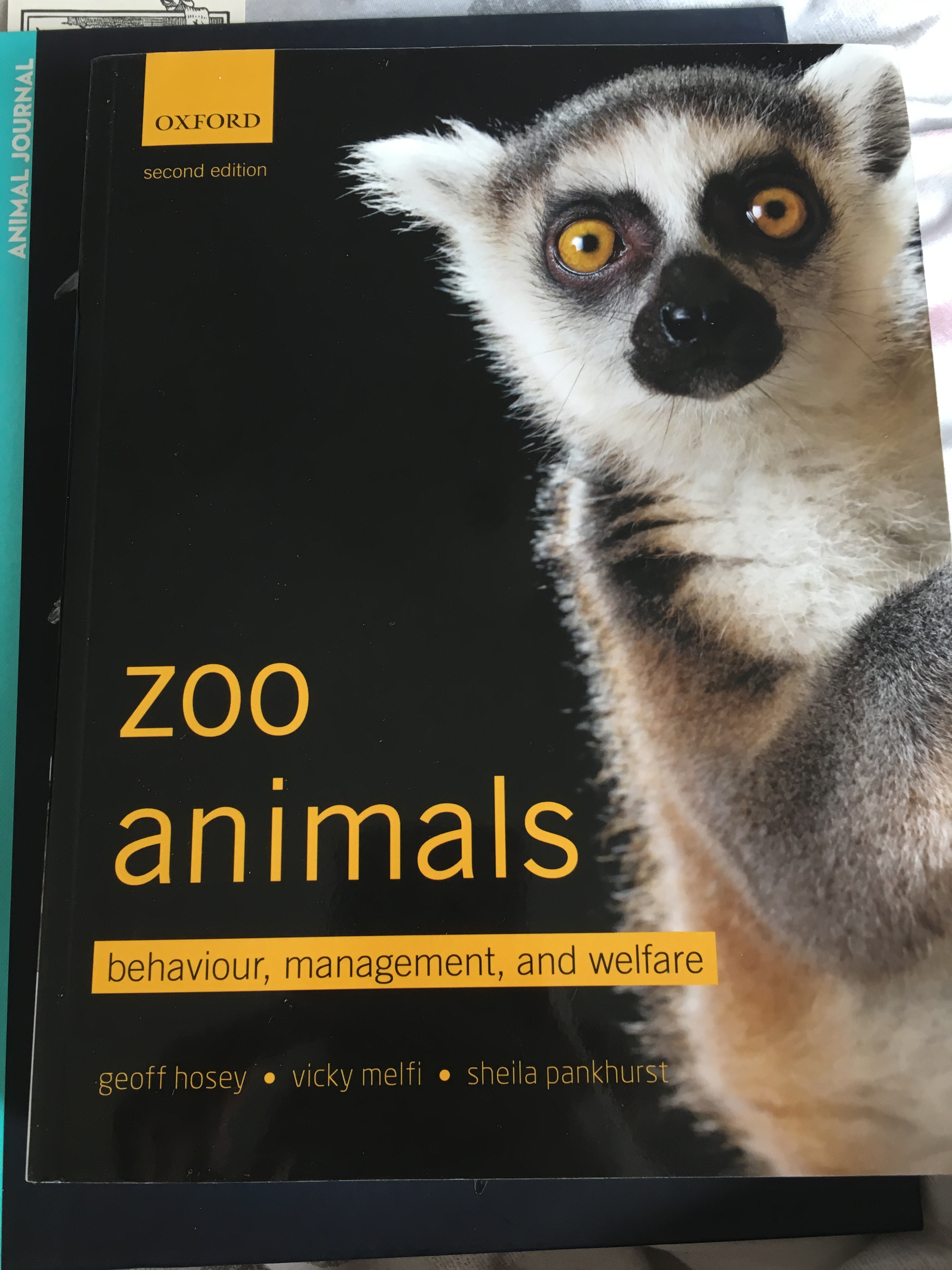
To begin semester 2 I bought ‘Zoo Animals’ written by Geoff Hosey in 2013 (Plate 2.). It was recommended by our animal behaviour lecturer Kirsty and I believe it will be useful when writing my management of captive animals assignment. I also purchased ‘Marine Animals of the World’ by Juan Carlos Alonso in 2018 (Plate 1.) to expand my knowledge on marine animals. I plan to check the Myerscough library for copies of the ‘Introduction of Veterinary Anatomy and Physiology’ written by Victoria Aspinall (2015). I previously took this book out of the library in semester 1 and found it very useful when doing further reading after my anatomy and physiology lessons.

This semester I have 3 assignments, 2 exams and 2 practical assessments. To remain organised I have already begun preparing a timetable of how I will work through each one to ensure I’m on track for the deadlines.

Exam week!

During exam week I had two exams. One for Anatomy and Physiology and one for Health and Nutrition. Both exams accounting for 50% of each total module mark. As explained in my previous post, I spent a significant amount of time planning and revising for these exams over the Christmas holidays. When it came to exam week itself, I spent time going over previous notes and using ‘quizlets’. I took note of any questions I answered incorrectly in the quizlets to give me the opportunity to focus on those topics and become more confident in them before the exams.

I ensured on the night before both exams I revised up until a certain time and then allowed myself time to eat, drink, relax and wind down before getting a good nights sleep. I wanted to feel ready and energised for the exams and believed this was the best way to do so.

On the exam day, I made sure to set off to university an hour earlier than I usually would to allow time for delays or traffic that I could encounter on my drive. Approaching both exams I tried to remain as calm as I could knowing that I’d put in the hard work and revision over the holidays. This gave me confidence to walk into the sports hall on each exam day feeling positive.

The January exams!

To begin 2019, I have two examinations at university to study for. Anatomy and physiology and health and nutrition. These are two science based modules which I enjoy a lot. Each module has a lot of content. Over the Christmas period I had family gatherings to attend, my work placement to attend and my general working job to go to. To ensure I set enough time aside to revise for both exams, I made a timetable and labelled it with all the times I was busy with work, placement or set social events. With the time left I planned a second timetable detailing a schedule of the module I’d be revising for each day, what topic I’d be revising and the amount of time I intended to spend on it. I incorporated hourly breaks of around 15 minutes to give my mind a rest and allow myself time to get a drink.

I found organising my revision into a timetable very beneficial. It helped me to identify where I had free time over the Christmas period to study. Setting specific times and dates for revision gave me motivation to use my time productively. Below is an example of the layout my timetable took (Plate 1).

Image result for revision time table
Plate 1. Example of a timetable layout (Distance Learning Centre, 2019)

References:

Distance Learning Centre (2019) Creating your perfect revision timetable, https://www.distance-learning-centre.co.uk/blog/26/creating-your-perfect-revision-timetable.html Accessed 28/1/2019

FINAL DAY AT THE SEAQUARIUM

Sadly my placement with the Seaquarium came to an end at the beginning of January. The 2 months I was lucky enough to spend there flew by quickly. As I’ve documented throughout my blog, I’ve learnt many valuable skills and gained knowledge about working with the marine mammals and aquatic life that live there that I hope to take with me throughout my career.

On my final day I cleaned out the pump baskets that were taken out of the plant room containing the pool filters. I cleaned them as thoroughly as I could so that the gaps between the baskets were unclogged of the dirt they had stored. They must be cleaned quite regularly to keep the filtering systems working as effectively as they should.

Later in the day, I cleaned tank pools rocks within the aquarium using brush tools. I was able to the take the rocks out of the pool and scrub them to get the dirt and algae off. I ensured I kept a look out for aquatic life living within the tanks whilst I was brushing and moving around the rocks so no harm was accidentally caused.

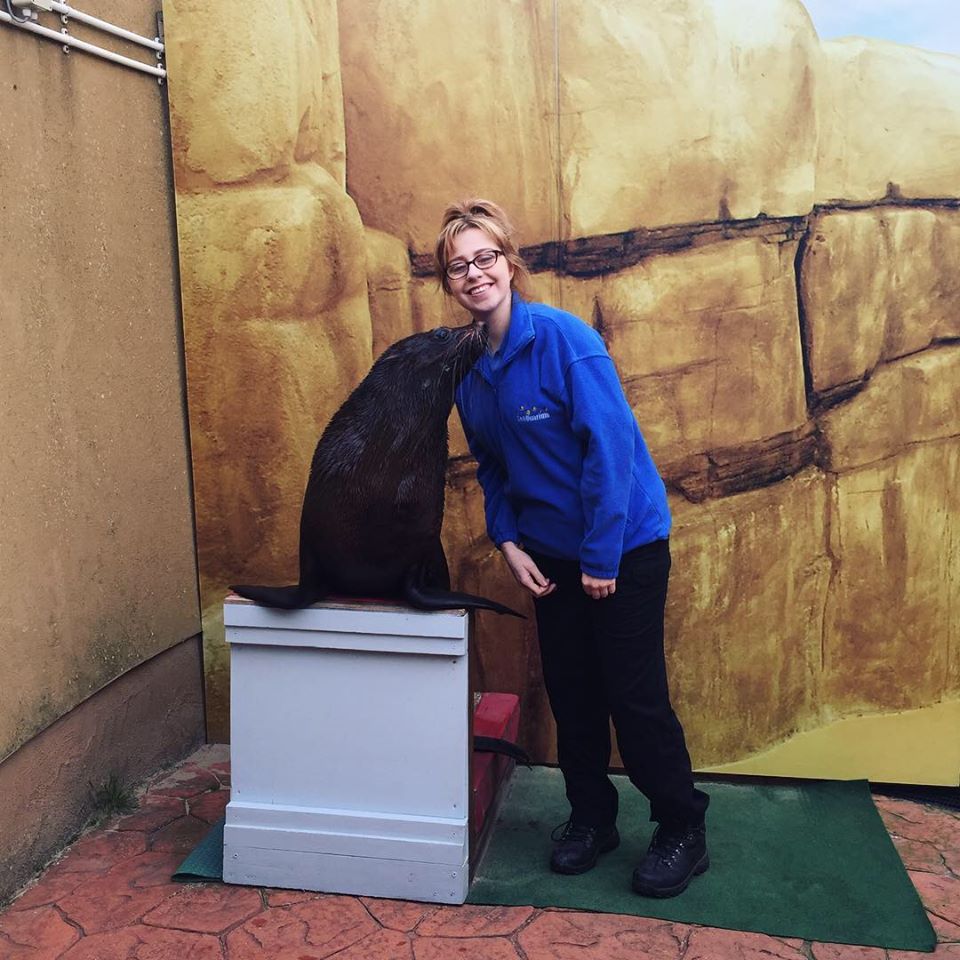
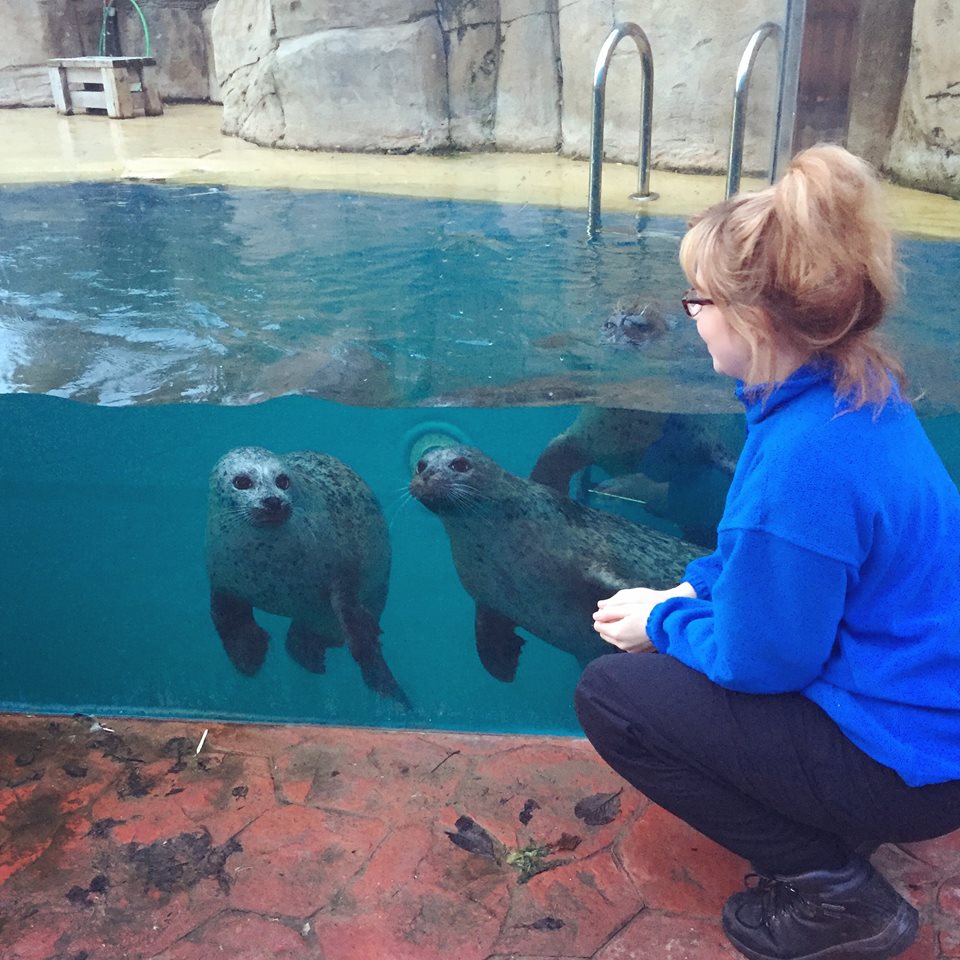
Below are images of myself with the harbour seals (plate 1) and Solo one of the African fur seals (plate 2) that I had the privilege of being able to care for.

Plate 1. Image of myself and Solo the African fur seal at Seaquarium Rhyl (Authors own, 2019)
Plate 2. Image of myself and the harbour seals: Wanda, Ina and Pamina at Seaquarium Rhyl (Authors own, 2019)